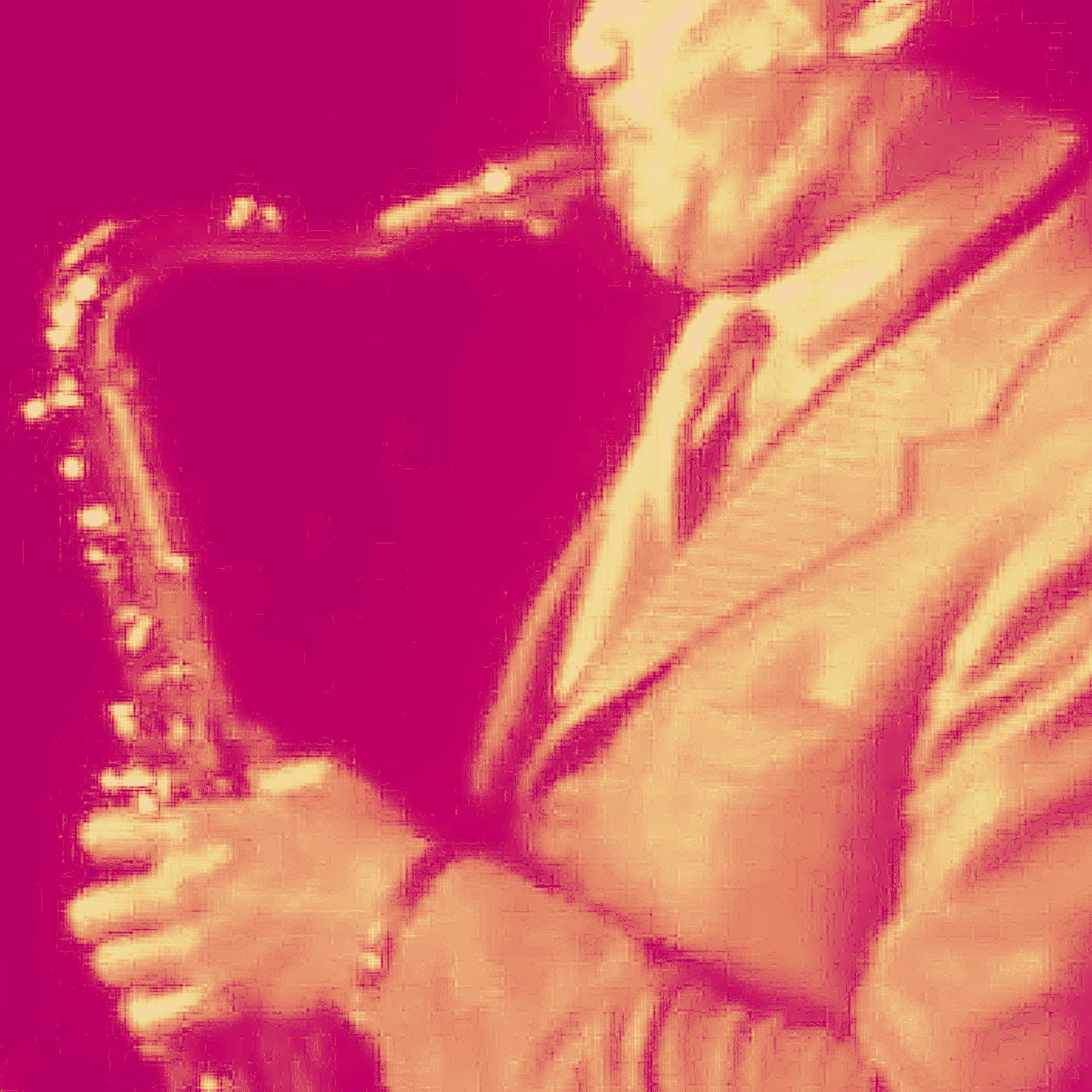
powerless : second take
prologue to something new i'm working on. bringing back a small side character from the Alice book. i'd done him wrong there and wanted to give him his due, so his very short story opens the new book.

Denzel Singer only ever really loved two things, jazz and Attie. And for a time, it was more like they were one and the same. He was a talented saxophone player and a rising star before he met her, but the music he made after her, and for her, and about her, and because of her, made of him a virtuoso, a visionary and a genius. Under her spell his records defined genres, and eras, and earned him the status of a legend. And then it was all over. She was the muse, and when she was gone, so was the music.
Attie was the one, he was sure from the moment he first saw her. And she fell in love with him almost as quickly as he did. Like him, she had a jewish father and an african american mother, and like him, she felt like she belonged to neither side of her mixed heritage. They had the same taste in music and films and books and the same sense of humor and of sex. Denzel always believed he was able to tell from a face alone how good a woman was in bed. With Attie he knew immediately she was dynamite. She was five years younger than him, of very light tanned complexion and very dark, wavy brown hair, with a lovely figure and otherworldly eyes the color of honey, and just as sweet. In fact, everything about her was mellifluous.
Both of them were seeing someone else, but the other lovers were kicked to the curb that same night. From then on they spent as much time together as was possible and were as in love with each other as anyone in the history of being in love has ever been, hardly ever leaving the bed. They got married three weeks later. Back then he called her Zoe, that was her name. But after a few months of spending almost every waking moment together, he started to call her Honey, and then Hun, and then as a joke once and a few times afterward Atila the Hun, and then eventually Atila, and then Tila, and then Attie.
The salad days lasted seven years. Seven wonderful years of Attie and jazz. He was at the height of his creative capabilities, record after record of classic after classic, so many of his tunes from the time became standards. He was on a roll. But all it took for the roll to be downhill was Attie leaving. And from then on each record was a disappointment, and all the living epithets began to disappear from mouths and pages and concert line ups, leaving only the legend, old and tired. Until even that was gone. Some publicist or whatever it was convinced his agent that it would be really good to do an album with this famous rapper, or at least one song. Jazz was on the way out, it was boring background music for upper middle class middle aged white men in their sailboats or their beach resorts, or else for dentist’s offices. If Denzel wanted to secure a future, not just a legacy, he should try something closer to popular taste, get with the program, involve himself in the culture. It was a disaster. Hated by the critics, mocked by the public, while his old jazz friends felt betrayed. After that, he couldn’t play anything right. He had lost his confidence. Ten years later he made a timid come back, but it was not about the music. He just needed money.
Things started to go sour with Attie way before his inspiration ran out. Attie wanted to have children, and Denzel wanted to have children with Attie. He’d often imagine how their kids would look like, and even dreamed a few times about them. But no matter how hard and how often they tried, the child was not forthcoming. They went to the doctor, he debased himself in the clinic, and a week or so later came the verdict. There was something wrong with him. His swimmers didn’t like to swim, or something. Attie urged him to try a few treatments, but another year went by and she wasn’t pregnant. And then she lost interest in sex, and in him. He didn’t want to notice her tone of voice when she said she was going out. It was a friend, another jazzman, someone he knew, no reason to worry. Yet he really wasn’t surprised when she said she was in love with Jack. He played the trumpet, and his swimmers apparently liked to swim. She was pregnant. And it couldn’t be his even if his sperm had decided to cooperate. They hadn’t had sex in months.
It had now been thirty years since he last saw her, and more than that since he’d kissed her, or made a successful record, or even an interesting one. His come back allowed him a more than adequate living, coupled with the royalties from his classic records. As for the new ones, they didn’t sell, and even the nicest critics called them uninspired. And Denzel knew it was true. After a few of these, and a few world tours, he finally decided a change of pace was needed. Europe was always kind to jazz musicians. Or at least that’s what he remembered from the twentieth century. But even twenty years ago jazz was already dead. And not only in terms of money, but something much more important. The spirit of it was gone, the camaraderie, the culture, the challenge. A couple of years were spent roaming, taking the pulse. He tried Paris first, then Copenhagen, then London, then he decided he should try Barcelona, and in the end settled even further west. He had played in the small country many times and was always received as a legend. And so finally he retired, resigned to watching the atlantic, yearning from a distance for his home on the other side of it.
And for Attie. She always said she couldn’t live anywhere other than the states. One day an old friend called him in the middle of the night from California, unaware of or unconcerned about the time difference, to tell him that Attie had passed. Just like that. The love of his life was gone from this world. She died in her sleep, and he couldn’t go back to it, so he spent the night listening to the records he made for her, most of them had her face as the cover, and then watching old pictures and videos of her, and of them. In the morning he wasn’t tired, and sat at the piano, maybe the grief would make something come out of his fingers. Something did, and he thought it was good. Six months later he had six new tunes, and was putting together a band.
He wanted to get the top tier of the jazz world to play for him, but they weren’t available, or were too expensive, and so he settled for the second tier. The core band flew from america, plus a bassist from germany, and got to work in Denzel’s home studio. But the tunes were lifeless, and his playing subpar. He always believed in what Louis Armstrong said about jazz, You either get it or you don’t… and if you don’t get it, you never will. And his age and experience taught him that the wisdom had to be expanded to musicians playing together, A band either grooves or it doesn’t, and if it doesn’t then it never will. And this one didn’t. He cycled through two other bands, but the same happened every time. He called his sister in america to express his frustrations, she wouldn’t lie to him, Stop wasting money, get a local band, some young kids with chops, that’s all you need really, isn’t this all about Attie, it’s your tribute to her isn’t it... I listened to what you sent me, it’s Shekhina all over again. Denzel did as she suggested.
But he went further. Originally the tunes were composed, or found, as he was fond of saying, on the piano. He then wrote parts for the saxophone, and played them, and improvised over the vamps. And then he kept expanding it, adding more parts for more instruments. It would be almost as big a band as in his seminal album Shekhina, and the tones, the textures, the melancholy were the same. Everybody thought the album was a spiritual tribute to the hebrew half of his heritage, and it’s true that at this time he was very deep into the study of mystical kabalah, but in fact and in the end the music as always was a tribute to Attie. She was his shekhina, the last sephirot, the sabbath bride, where God comes to rest. And he wanted his new album to be the same, a spiritual homage to the love of his life. But he wasn’t sure anymore, not after failing to play the music right even with a core band of highly trained professionals. How much more difficult would it be for such a big band to work when composed of young players. It was his sister again who gave him the answer, Just strip it down, get back to basics… if it’s a tribute, an elegy, it shouldn’t be flashy and bombastic, that’s not who Attie was, it should have a quiet dignity and charm, so a smaller band makes sense, maybe even just piano and bass… and you. And that’s when he knew who to hire.
Close to his place there was a fancy shopping mall where the old jazz musician liked to stroll, window shop, and most of all sit for an espresso and a custard pie or two. Most days there is at the very least a competent pianist playing in the food court. And sometimes there is a bass player too. Two young white cats playing jazz standards with the smoothness and feel of another era. Once he heard them play one of his. It sounded good and he was pleased. It almost transported him back to his young days, when he had hope, and when he had Attie. After his sister gave him the idea, he went to talk to them. They of course accepted, after a couple of minutes of open jaws and stunned looks. Rehearsals started in his home studio a couple of days later. It was fun. For one, he had forgotten how it felt to be treated like a living genius, not just an old washed up legend. The young kids, nineteen and twenty they were, revered him and his music, and from their perspective it was a magical experience they would never forget. And second, he missed jamming, to make music for music’s sake, in the moment. But when he listened to the tapes at the end of the day he knew that it wasn’t right. And it was him. The young kids played their asses off in every take, having the time of their lives, with that carefree intensity that is a privilege of youth. And the old man that he was could no longer keep up. After two weeks, he dismissed them.
A week after that he was sitting in the food court eating a custard pie and drinking an espresso, listening to them play. When the duo noticed him, they took a break and had a proposition of their own, and hoped the jazz legend wouldn’t be offended. He wasn’t offended, though it was a little ridiculous. But it was also harmless, so he agreed. What’s the worst that can happen, was a reasonable question that needed no answer. That very afternoon he booked the recording studio for the next day, as early in the morning as possible, the kids had said that was the best time for their experiment. He was nervous, but also excited. They picked him up at eight, the session would begin at nine. When they parked the old and beat up seat ibiza in the studio’s parking lot they had plenty of time still to sit and smoke a king sized cigarette almost equal parts tobacco and hash. The young bass player put on Shekhina, it was appropriate. They smoked, and listened to the classic album, and then it was almost time to go in. When was the last time you were high mister Singer, Call me Denzel… the last time… oh boy… probably before you were born, the jazz legend laughed in his old raspy voice, How do you feel, Good… good… I feel very, very good… let’s play.
From the first note to the last, almost an hour of unbroken song and improvisation, weaving all the tunes they had rehearsed into one single whole that was more than the sum of its parts, the three of them. Sometimes Denzel closed his eyes while he played and he saw Attie smiling, so lovingly, or was it when he opened them, but either way whenever he saw her the music would get fuller, and not only him but the band as a whole responded to her presence, from crescendo to climax and back down. The music was at times slow and heartfelt, at times frenetic and ecstatic, but always intense, and always sincere. And when the last note was played, they all felt that it would be not only Denzel’s comeback, or else his last true statement, no, this would be a recording that would define a new era, initiating a jazz renaissance, born as it could only be from the joining of old and new. But not a second after the last note, when they were all still reeling speechless from the experience, the lights went out, and when the backup system kicked in, they went to check, and the take was lost.
.