
Endings
lately, in between carrying boxes and throwing away useless crap accumulated over the years, I have been ruminating on the nature of endings and beginnings.

Today’s world has reached a stage which, if it had been described to preceding centuries, would have called forth the cry: ‘This is the Apocalypse!’. Yet we have grown used to this kind of world; we even feel at home in it. Dostoevsky warned that ‘great events could come upon us and catch us intellectually unprepared’. That is precisely what has happened. And he predicted that ‘the world will be saved only after it has been possessed by the demon of evil.’ Whether it really will be saved we shall have to wait and see: this will depend on our conscience, on our spiritual lucidity, on our individual and combined efforts in the face of catastrophic circumstances. But it has already come to pass that the demon of evil, like a whirlwind, triumphantly circles all five continents of the earth.
~ Alexander Solzhenitsyn
Maybe it’s because I am moving and a phase of my life is ending and another beginning. Or maybe it’s because, more specifically, it’s not a simple move from one place to another, and instead one that will by necessity be an adventure, as I don’t know yet where we’ll end up. But lately, in between carrying boxes and throwing away useless crap accumulated over the years, I have been ruminating on the nature of endings and beginnings, fleeing to the wilderness, exile, Moses and Exodus, Lehi in the desert - but mostly about the Flood. And this rumination reminded me of a story I read a few years ago.
In 1936 a Soviet soldier entered the farm of one Karp Lykov and killed his brother as they worked the land, for no apparent reason other than the banality and arbitrariness of communist terror, part of its violent persecution of religion (the Lykovs were an ‘Old Believer’ family, a ‘traditionalist’ form of Russian Orthodoxy). After this incident, Karp Lykov took his wife and two children and fled to the Siberian Taiga, one of the most inhospitable places on the planet and where it was thought impossible for a human being, let alone a family with children, to survive. The family, however, did survive: adding one more son and one more daughter to the family in the meantime. When the family was discovered 42 years later, in 1978, the mother had died of hunger during a particularly aggressive winter; and today only one of the daughters, Agafia, remains.
Despite having had some contact with civilization since 1978, including a trip around Russia sponsored by the Soviet government in the 1980s, Agafia has always preferred to return to the hut her father built in the Siberian mountains and where she was born. She says she gets sick when drinking tap water or breathing city air. Despite this, she accepts some gifts from civilization, especially seeds that she later plants in her garden. There is a beautiful documentary about her. She is still alive.
This fascinating story has many angles of interest, one of which is that despite being only removed for decades, rather than centuries, Agafia reached a conclusion similar to that predicted in the epigraph of this text. Whether because of television, automobiles, the undrinkable tap water or the unbreathable city air, Agafia couldn't help but notice how aberrant society had become (and it was nothing particularly related to Soviet life, just the developments and pace of contemporary life). When she receives packages of seeds, Agafia removes the seeds and burns the packages. She believes that the barcodes are the ‘mark of the beast’ which ‘will bring the end of the world’. Her guess is as good as anyone’s, probably better than most. The abrupt confrontation with the ‘future’ (or is it the present?) thus had precisely the result that Solzhenitsyn described. What for us is normality would be seen by ancient people as a satanic aberration – and it is a real task and effort for us, born and raised amidst this chaos, to begin not only to understand, but to feel how aberrant modern life really is and try to at least discern as the people of other ages would certainly have discerned. Because it’s really not just in the extremes, as the insanity that gets put forth in the propaganda; it really is more in the daily, mundane things, that the deeper aberrations are found. And they are deeper, precisely: more entrenched, less noticed.
I am not in the same situation as the Lykov family, not even close. No one has been killed; but I would be blind if I didn’t know that violence is definitely on the horizon - and some are definitely blind, by choice or habit. And I am not being persecuted in any meaningful sense - and yet the urban or suburban environment is deteriorating every year and becoming more and more oppressive, in many different ways. This is not the interesting part. What is interesting is that this deterioration is so silent. One gets accustomed to it, like a frog in boiling water. It’s not that we didn’t know. We did know. But knowing is not enough. There is something more. One day you wake up and, for some reason, you can tell it’s time to flee to the wilderness. Even without knowing where you’ll end up, the important thing is to get away. God has just told you to build an ark and get on it. Quick.
Once you take such a decision, you notice certain things - or rather, you finally understand them. ‘Crisis’, for example, means judgement. In a vacuum one doesn’t really feel the very concreteness of this. But when you have to pack your stuff, you end up judging what is to be taken with you and what is to be left behind, what is really valuable and we should keep, and what we don’t really need or can be replaced. You will also find that you’ve accumulated way too many things, and that things are an anchor: great when you’re settled; awful when it’s time to sail away. And it’s not just things, but ideas; habits of thought. You even come to understand that you pretty much do this every day at every fork in the road, no matter how small. But again, the interesting thing is that it takes a certain extreme of experience to make you understand the smaller instances.
Since Agafia first came into contact with modern life, the strangeness of modernity has only increased, and exponentially – whether in newspapers, films, television or any other distraction, but many other developments that, no longer just a subculture relegated to the margins, are an integral part of the status quo and even taught to children in schools. They are so common now we forget how insane it all is. All the generations until very recently could count on the wisdom of the old; they could count on their fathers to pass on the knowledge of how to navigate the world. But the world my father was born in was very different from ours. Even the world where I was born in thirty plus years ago is completely different - my old self has hardly any actionable knowledge, every year we are navigating new waters. And just like we didn’t notice the conditions around us deteriorating every year, at least not in any concrete sense, it is sometimes hard to remember that life wasn’t always like this. Most of the time, the aberrant nature of modern life goes completely unnoticed – the old normal every day being transformed into a new one that isn’t normal at all. Maybe in part because, if one goes by the official story, the aberration and deterioration is a sign, not of a fall, but of a continuous rise. But even if you avoid propaganda, the force of familiarity exerts its influence: the most anti-establishment person still had to wear a mask to go to the grocery store (or alternatively, starve). And then we didn’t, but most still did it anyway. Then with time they mostly went away and everyone pretends. Life goes on as normal, or does it? It’s hard, looking back, not thinking another important step has been taken; that a momentous change occurred. Yes, it was one that was already foreseeable, at least in a general way, but when it comes you shouldn’t dismiss it as ‘just another day’. And yet we do, all the time. I suppose our sanity depends on this to a certain extent.
Many Christians believed they were living in the end times in many other times for other reasons. This is what everyone says to me whenever I get too apocalyptic. I can’t deny it of course. But the patterns are repeated at all levels, and the signs of the end are present at all times, and are continually manifested. Just like the little crises and judgements one goes through every day are smaller versions of bigger ones. It’s easy to dismiss the big ones by saying they are just like the smaller - but it profits very little to dismiss them. The end of a day, a week, a month, a season and a year all share certain characteristics, but also the end of a relationship, a company, an adventure and a life. But the necessary tasks of each ending are different, in nature and in degree. All the end of the year festivals, such as carnival or its modern incarnation in New Year’s celebrations, manifest the same pattern: excess, noise, confusion. Ever since we started the move, as an example, our diet is not as good, our sleep patterns not as regular. Since I understand the pattern, I am not too concerned, it’s all part of the process. There is a symbolic relationship between the beginning as the beginning and the beginning as the center, and equally between the end as destination and the end as the margin. That is, between space and time, and on the margins, at the end, of time as well as space, is where the monsters are found. And our time manifests precisely all aspects of the margin: in its exaltation of exception and denial of normality, in its insistence on hybridization and mixing at all levels, even in the new campaigns to eat insects. Not every end feels like a fire sale where everything must go, but some of them do.
All this talk is depressing, not to mention naïve and passé (you can tell the attitude involved by the use of French words, can’t you?). It’s fine for that cute old lady to think like this, but we don’t believe in such things anymore. Unlike her, who reads the Apocalypse of St. John in such a literal way as to identify barcodes with the ‘mark of the beast’, we are more enlightened – we read Scripture, especially that kind of Scripture, with a more sophisticated eye, and know that it’s all symbolic – a word by which we mean that it has no reality at all outside of our own minds. And it is a paradox of prophecy that if one takes it seriously, one might avert it – and hence it ends up being an unfulfilled prophecy. As modern men we aren’t prepared to deal with such ambiguity. We know we’re going through a dark phase, but there have been dark phases before. And we can also quote Scripture to make our point: ‘there is nothing new under the sun’. Touché, alarmists – there’s the French again.
Back to the move. You make the decision and at first everything seems exactly the same. But then you start to pack and things start disappearing, going in boxes or in the trash. You no longer propagate plants, you only save seeds - and seeds take very little space, they are just potential, they don’t decorate the room or produce food. Paintings are removed from the walls, pictures of loved ones are removed from the furniture. More and more the house looks less like your home and more and more like a generic group of walls. You notice the imperfections you tried to conceal with decoration. We may still sleep here, but we don’t live here anymore, at least not totally: we live as much in the boxes. They are heavy. The same is true of the end of the world. Suddenly you look around and think: was this ever my home? Was the neighborhood always like this? When did they take away the paintings and pictures? Why is it so generic? Anyone could live here. And that’s why no one really does.
I have always been fascinated by one of the stated conditions of the end times: that the Gospel be «preached throughout the whole world as a witness to all nations» (Matthew 24:14). The specifics may be important, but the implication seems to me much more so. By this I mean that in 1936, not even one hundred years ago, when the Lykov family fled civilization to go into the wilderness, there was still the possibility of just disappearing. A man, or a whole family, could pick up and go somewhere where they would not be found. Their existence would be unknown to any and every government, any and every system. Only God and the gods (or some of them) would know about them. They were, in a very specific sense, free. Until that time, and probably not much long after, it was possible for a man or a group of people who didn’t fit in to go somewhere and be left alone. For good or ill, they were not part of anything. The only law they were under was the law of nature, and if they were religious, the law of God. This kind of freedom doesn’t exist anymore. There is nowhere to go. There is no desert, no wilderness anywhere. You can’t cease to be a ‘legal person’. All persons are legal now, and there is always somewhere a paper, or a hard drive, with your name, and your number, and your address. The satellites will always be watching, at the very least. They can come for you at any time, in many different types of vehicles - probably to collect on unpaid taxes. Or they can just send an unmanned machine. Am I the only one who feels the tremendous implications of this? Not even all the gods have this kind of reach.
So it’s not surprising that another end times condition which is very common to find described is the existence of a global system. This, too, is symbolically related to the margin, and to the end: the inclusion of the margin in the system, instead of being what lies beyond the Wall of Alexander, precisely means that everything else has already been included and thus having a similar, though contrary, meaning to the preaching of the Gospel throughout the world. I’m sorry that most Christians can’t see the relation, but they are related. I also know ‘inclusion’ is now a very important value, especially for the system who wants to include everything - but not everything should be included. The value of fitting in lies in the possibility of not doing it; and the value of not fitting in depends on having something one cannot be fitted into. A total system is a dead system.
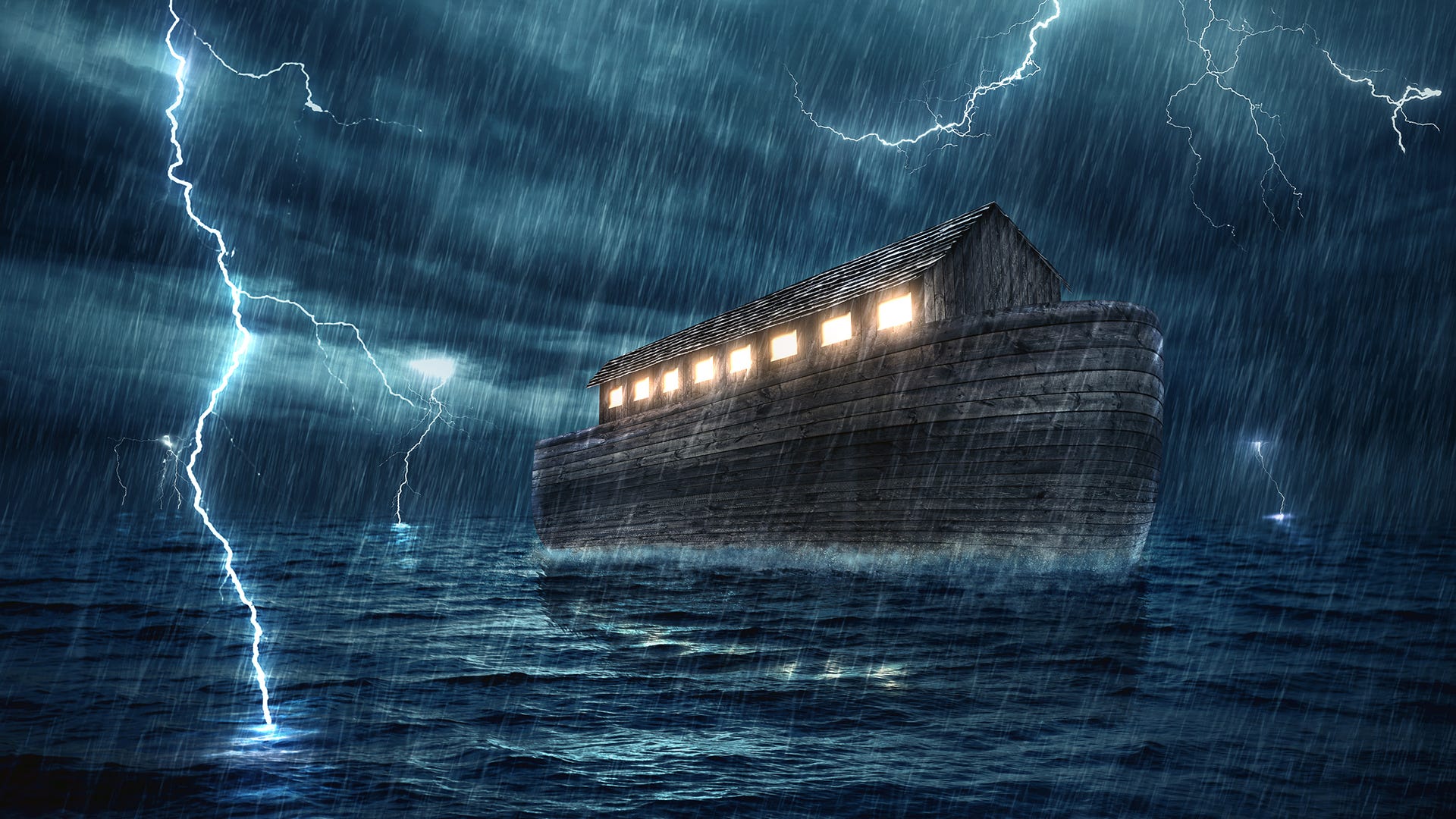
These conditions are for the first time met. You can say that there are still remote tribes that have not heard the Gospel or that are not integrated into some bureaucracy, or that the global system is not yet a single government, but to dwell on such details is to miss the point of what is important, which is that not only the conditions are met, even if not yet fully manifested, but that symbolically they change nothing of the present reality. With regard to the global system, in the first place, conditions (and even implementation) have existed for several decades for various global structures that, under that name or not, point to and lead to true global governance. And in the last few years we saw for the first time the full coordination of one plan across the world, with no deviations; a single narrative, a single enemy that must be fought together, and a single solution in which everyone has to participate – including conditions (marks) for a return to ‘normality’. This global coordination, while not officially under a single government, is incredibly significant. Tradition points out that the effective reign of the Antichrist will last very little, and that in fact it will be when he is at the height of his power that the End will come. So the important thing is to notice the approach, not the exact moment when it happens, because by then it will be too late. This is what we realized, even if at a microcosmic scale, and why we decided to move. We didn’t want to wait for the rain to start falling to get on the ark.
So there is this strange parallel between ‘the preaching of the Gospel to the whole world’ and the total system. This is because counterfeit is a crucial character of the last days. The counterfeiting of charity, for example, is seen everywhere and for all purposes – and it deceives, in fact, almost everyone, including most Western Christians, to whom it is specifically addressed. The false charity that, in the face of all kinds of inversion, instead of forgiving and saying ‘go and sin no more’, says ‘your sin has no need of forgiveness’ - in fact, it’s not even a sin at all, you haven’t missed the mark (the etymological meaning of sin) because there is no mark (except that one mark, by which you can’t be missed); the false charity of the welfare state; the false charity of the new ‘health’ measures; the false charity of ‘environmentalism’; the false charity of destroying one’s own culture and pretending we’re helping others build theirs. But the great sign of these counterfeits is not that they exist, nor that they are so numerous, but that the vast majority of Christians accept them – with indifference or even fervor, and all justified in the name of Jesus; where before Christians saw in Nero the antichrist, today they hail countless Neros who rise up (and they are as much on the Left as they are on the Right, assuming those designations keep any meaning at all).
Perhaps the least understood aspect of this dynamic is how the world’s own resistance to these developments contributes to the end result, the false ‘awakening’ that is based on the conspiracies that are beginning to come to the surface and fascinate so many people. If on the one hand a large number trust the present system even when the signs of its corruption are obvious; on the other hand, many understand that the system is iniquitous and corrupt, unravel the conspiratorial details of this iniquity and corruption and attempt a purely political resistance. But such an antithesis will contribute, along with the thesis, to the antichrist synthesis: the inevitable collapse of the present paradigm will generate in both groups the will to embrace the system that will promise to solve all these problems and offer peace, stability and prosperity – the synthesis of the antichrist, who will be welcomed as a liberator from suffering and oppression. This unveiling of the conspiratorial reality is a false awakening for the simple fact that it is based on political and social combat, and not on individual growth and repentance; that its focus is the salvation of society, not the salvation of the soul. And crucially, such a view is supported by bureaucracies and Christian organizations of all denominations – which even already participate in persecuting those who consciously oppose this false wisdom on both sides. Contrary to what some believe, the powers of this world have no problem at all with this ‘awakening’, they don’t really care that most know they are lying (we could dig another famous quote from Solzhenitsyn): it is enough that the awakening remains a purely negative one, of opposition, rather than any positive vision. I’m sure that Noah wasn’t the only one to notice the waters rising; many probably kept screaming at the sky instead of building a boat.
It is very difficult to talk about these subjects in a systematic way, which is why this text is not particularly organized, but rather given in three different rhythms. What does my move, the Lykov story and the end of the world have to do with one another? Nothing. Or everything. You decide. But it is even more difficult to talk about these things on our day to day lives, with our families, friends and neighbors. It is in itself a sign of the times that so many cradle Christians know and care absolutely nothing about the end times, nor about the warnings we have been given. The events of the last few years have proven how easy it will be for the majority (including Christians and their organizations) to accept the antichrist system and its mark. Casual conversations about what has happened, and what is already out there, usually end up with the common conclusion that ‘if we do this, we can get back to our lives’ and that refusing to do so, especially on principle, is stupidity, if not madness – remembering the famous words of St. Anthony of Egypt about the mad saying to the sane that they are the mad ones for not being mad like them. One can see this same justification being used in the future for the final ‘mark’, without which one cannot participate in society. But even more stupid or crazy we seem if, instead of justifying our choice with scientific data, profane doubts and tales of conspiracy, we mention prophecies and sacred scriptures. How quaint.
Other than telling you about it, what can I do but get on the ark, wait for the waters to subside and hope to land on the mountains of Ararat?
I was revisiting DBH in light of our discussion, and I found that I definitely do feel a bit more critical of his views now. But the thought also occurred to me that the only two possibilities I can see are Calvinism and universalism. My thinking is:
1) An uncreated spirit is not determined by anything outside itself, which means that 2) it must be determined either by its own nature or not at all. 3) If it isn't determined at all, then its decisions are random and thus unfree, whereas 4) if it is determined by its own nature, then it must be so forever. 5) So, an uncreated spirit that is against God must have been predestined for damnation by its own nature. 6) But if every uncreated spirit has a telos toward the perfection of being, then ultimately all spirits will be saved.
So I realized that it all comes down to the relationship between freedom and telos. My view turns out to be that the telos of at least human freedom is outside of itself, and that it may even be so for all spirits. And if no spirit has a telos toward evil, then it naturally follows that evil must be the result of a sapping force, a Nothing, twisting and hollowing and perverting all spirits. And then the goal is the annihilation of annihilation, which can only be achieved by . . . true creativity.
Anyway, I don't wish to bore you or belabor the point, but thank you for your extensive engagement on this topic, here. This has been clarifying, and I expect that it will prove to be useful somewhere down the line.
A thought I had earlier today was about Jesus from the Cross saying, "Forgive them, for they know not what they do."
That insane generosity was part of what led me to believe that He is the Lord in the first place; that He could say of His murderers that they deserve forgiveness, on the grounds of ignorance. This must be the Lord, I thought. He did not hold them as guilty, despite having an absolute reason to do so. I saw that He was beyond morality or justice, in the ways we conceive of them. An entirely other order of reality.
How does that fit with humans knowing what evil they do? I have tried, and just do not understand. My intuition just calls for mercy for the sick. Who is it you see who does evil every day, who is an actually flourishing human? All I see who deny the Lord, they live in their own Hell. That justice is swift.