
.diminished discords (xi)
stories, spells and music

in the past there were outbreaks of war, like herpes or the bubonic plague, but now war only breaks out, like an escaped convict. countries are regularly war torn, rarely war tearing, but the world can only plunge into the broken out but not outbroken war. watersheds then become pools of blood.
.
if you're not an individualist then i'd rather talk to whoever it is that decides things for you. an anti individualist is just an individualist for an individual other than himself.
.
illegal alienation, avant gardenia.
.
intentional communities don't work for the same reason unintentional communities stopped working.
.
mankind
does not take kindly
to one of a kind
.
i often have nightmares of David Bentley Hart mistaking me for a donut and trying to eat me while i throw fat statues of the buddha at him as i escape. they seem to distract him momentarily, but then he gets hungry again.
.
being multifaceted is great. but being two faced is bad. i guess it has to be at least three faces to be good.
.
i tried to find the quote but couldn't, but what i remember is that at the end of his life Flaubert said something like: i'll die soon but that whore Bovary will live forever.
.
her name was claire voyant, and she was blind
.
using ai for work makes me think of Neil Postman talking about the introduction of the computer in schools back in the 80s. before it the schools collected small bits of information on staff and students. more capability, meant more data. but for no reason. just because. a pointless waste of time and money and also increasing invasion of privacy ensued. it fed on itself perpetually.
this bit from Postman also somehow made its way into the plot of my first novel in the form of a bureaucracy in hell. i get obsessed with little things like this and then they end up everywhere.
.
forget post modern.
i don't know about you
but i'm super nova
.
i reject the crassness and vapidness and cynicism of post modern intersexual culture, and also the traditionalist and antiquarian legal utilitarian frame of romantic love. or any other kind of love for that matter.
.
my opinions are only those that Evola and everyone Evola liked (and everyone who likes Evola), and also everyone Evola hated (and everyone that those who like Evola hate), would find insane.
.
the only way to make the mundane magical is to fall madly in love.
.
fiction for me is a parallel world where people are supposed to be cooler
morally speaking, my main characters are all a particular shade of colorful gray. they are all morally intelligent. even when they fail to live up to it, they are not villains. i don't really do villains. evil isn't interesting to me, it turns out. i'd much rather present a positive vision of people being better than they usually are than do a critique of reality as it is. (i'm as surprised as anyone by this).
.
i’m now at the final sprint phase of the new book. when it gets to this stage, i start thinking about the peripheral aspects more seriously. like tags. i didn’t do epigraphs for the other ones, and was looking for a tag, but nothing was coming out except something stolen from Steely Dan’s My Rival, so i thought maybe an epigraph. of course i went to Ecclesiastes first, but didn’t want to use my favorites again since they feature prominently on the first novel, so i took a book off the shelf i’d only skimmed, poems by Rumi, Rubais more specifically, and soon came upon this one which is very appropriate for the book:
of all the troubles for you to seek
seek the troubles of love
so for the first time, there’ll be an epigraph.
.
i also found the cover. i had other ideas but then it jumped at me, and it needed little editing too.
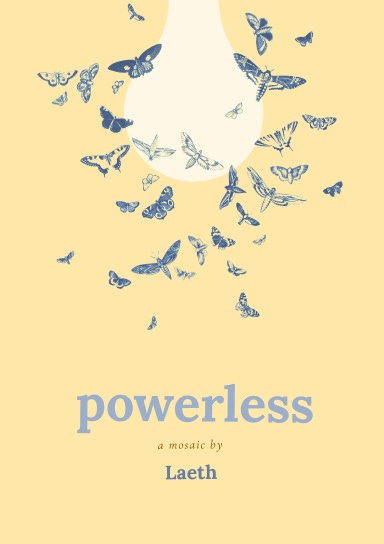
it really communicates the idea of multiple characters helplessly orbiting a central theme, which is precisely what the book is. and it maintains aesthetic continuity with the other books. which is important, since this book is a (sort of) sequel to Sketches of Alice. and it seemed to me like the only acceptable follow up to a love story was a bunch of them. multiplying those entanglements.
i'm still unsure of how much of the premise should be revealed. i'm tempted to leave most of it mysterious, for the reader to discover and tie together as he reads. even if it hurts discoverability, it's more beautiful this way.
.
and then with the cover the tag also snuck up on me:
like moths
to the light
fools in love
(was able to pay homage to Steely Dan after all)
.
finally, today’s musical portion.
there’s this interview with Wayne Shorter where he quotes Miles, doing the voice of course, they always do. and Miles had some interesting questions for Wayne. he’d say, Hey Wayne, you ever get tired of playin’ music that sounds like music. or he’d say, Hey Wayne, you ever play your horn like you don’t know how to play. i love it of course. (Miles Davis wu wei, what’s not to like). this happened right as they were both stumbling upon what would become jazz fusion, so it makes so much sense. and although I do think the second great Miles quintet actually falls short of both Miles’ and Wayne’s (not to mention Herbie’s) geniuses, there are some pearls. so here’s a little one, called Little One. Herbie is the composer, and Miles gets the first solo, but Wayne really steals the show.